Keep an LLM Wiki
The best thing I've done with AI isn't clever at all. I keep a wiki of everything it should already know.
Using an AI assistant used to feel like starting from scratch every day. It was smart enough, but every new chat began from nothing. I'd paste in the same background over and over: what the project was, what we'd agreed last week, the email that changed the plan, where a ticket had got to.
Claude already has stuff to help with this, like Projects and Skills, where you hand it files and instructions to work from. They're genuinely good. But what actually clicked for me was one step past that: I keep my own wiki, just a folder of plain files, and point the model at it. Not for me, for the model.

Caspar David Friedrich, Wanderer above the Sea of Fog (c. 1818)
A wiki for the model
It sounds like nothing. You keep a few plain files whose whole job is to answer the stuff the model keeps asking. It looks a bit like documentation, but it's not really. Docs tell a person how to use something. This just tells the model how things actually work on my projects: notes and transcripts from meetings, the email threads that actually moved things along, where each ticket's at, and the background and decisions you'd have to explain to anyone new. So when I open a chat to draft a doc or write an update, it reads that first and already knows what's going on.
One rule sorts out what goes in:
If you have to explain something twice, it should've been written down.
If I catch myself saying the same thing again, that's not a chat, it's a missing page.
Why it works
A model's only as good as what it knows when it starts. Give it nothing and you get a generic answer, because generic is the safe bet when it can't see your project. Give it the meeting notes, the email that changed the plan, and why that call got made, and suddenly the thing it writes sounds like someone who was actually in the room. That's the whole difference really: a draft you bin and redo, versus one you just send.
What it actually does
In practice it runs the consultancy side of my work. It drafts my emails. It tells me what to get done today. It builds decks, plans, and first drafts of documents. Because it can already see the meetings and the threads and where everything's at, I don't have to brief it every time. It just gets on with the stuff a good assistant would do if they'd been sat next to me all week.
Funny thing is, the one bit you'd think needs all this context, the actual coding, is the one bit that doesn't. When I'm building product I use Claude Code, and it just reads the codebase itself. The wiki's for everything around the code: the plans, the writing, the decisions, the follow-ups. The messy human stuff, not the actual code.

Caspar David Friedrich, Two Men Contemplating the Moon (c. 1825)
It's just files
The best bit is how un-clever it is. A wiki is just a folder of text files. It's not tied to any one app or model. Tools come and go, models get better or get retired, and the wiki doesn't care. It's the one part of my setup actually worth investing in long term, because it'll outlast whatever I'm using this year.
That's why I treat it as the single source of truth. Everything a session might need is in one place, in a format anything can read. I keep it in git with auto-commits, so there's a full history and nothing quietly goes missing, and I get it to log the stuff it does and the calls it makes, not just where things are now. Knowing where a project's at is handy. Knowing how it got there, and what's already been tried, is what stops me and the model going round in circles.
Not only for work
Once you think of it as just context the model reads before it starts, it stops being a work thing. I keep one for my own life too, a folder for each thing I care about: money, side projects, learning, reading, languages, the gym. Each one's a running log as much as notes: my workouts, my weigh-ins, what I ate. Dead boring, and always up to date. Any chat I open can read it and pick up where I actually am this week, without me explaining my whole life again.
The bit I didn't expect
Writing all this down made me way clearer about my own work.
To hand the model a decision, I had to actually be able to say it. Most of the time I could. But every now and then I'd start "we're doing it this way because…" and just not be able to finish. Bit uncomfortable, but that was the point. If I couldn't write the reason down, it usually wasn't a reason, just a habit I'd never questioned. So the wiki turned into a bit of an audit, and a fair bit got binned once it was sitting there in black and white.
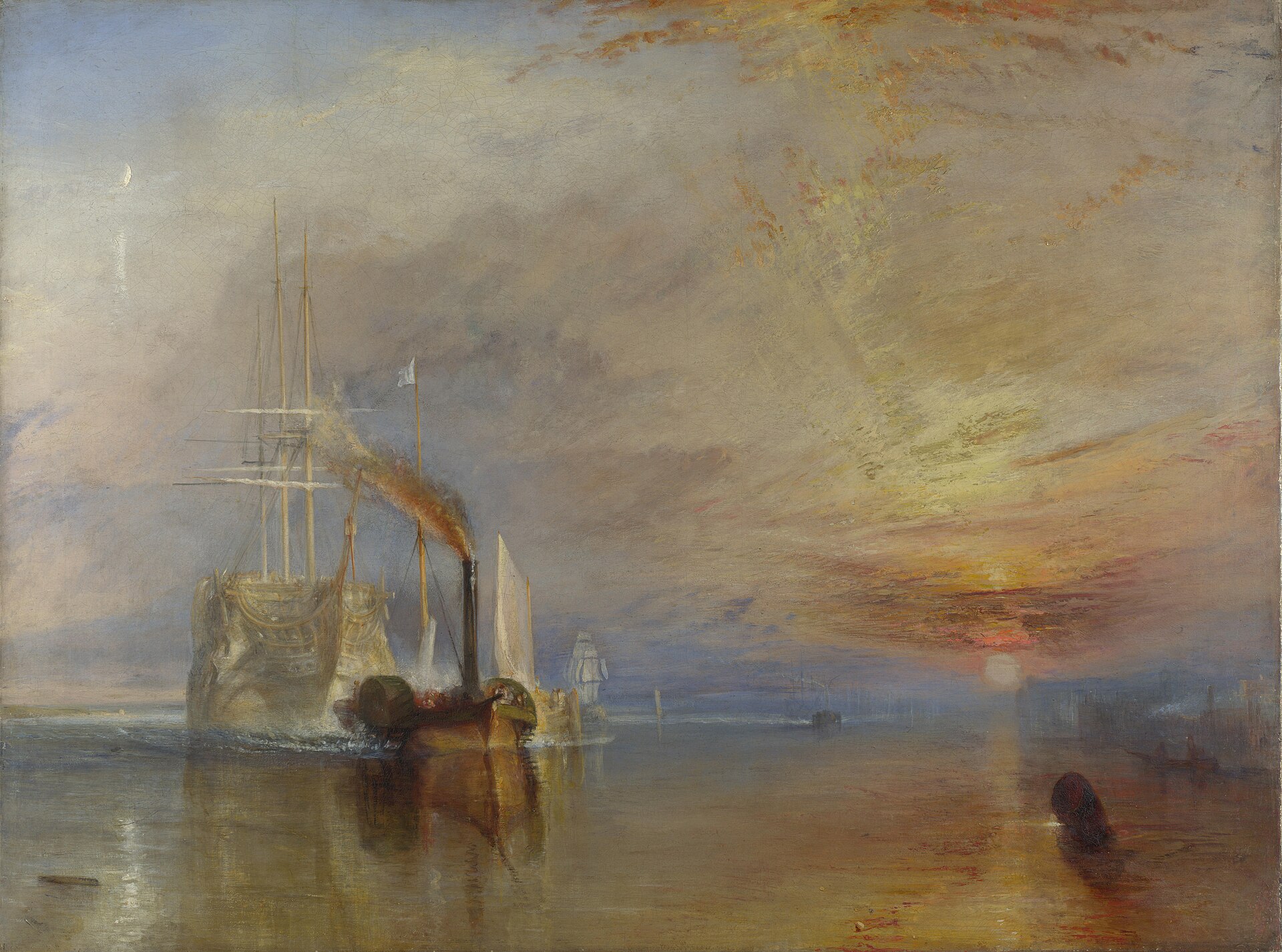
J. M. W. Turner, The Fighting Temeraire (1839)
Keeping it current
One thing worth flagging, because it's the opposite of what you'd think: a stale wiki is worse than no wiki. No context makes the model careful. Wrong context makes it confidently wrong right alongside you, because now it's working off stuff that isn't true anymore.
I don't really delete things though. I just keep everything connected to whatever's relevant, and run a regular scan to catch anything new that's come in, emails, meeting notes, tickets, and make sure it all gets pulled in. So it grows and stays current on its own, instead of me sitting there tidying it.
Anyway, that's the whole thing. The LLM wiki's genuinely made my life loads easier, both at work and in my own development and life outside it.